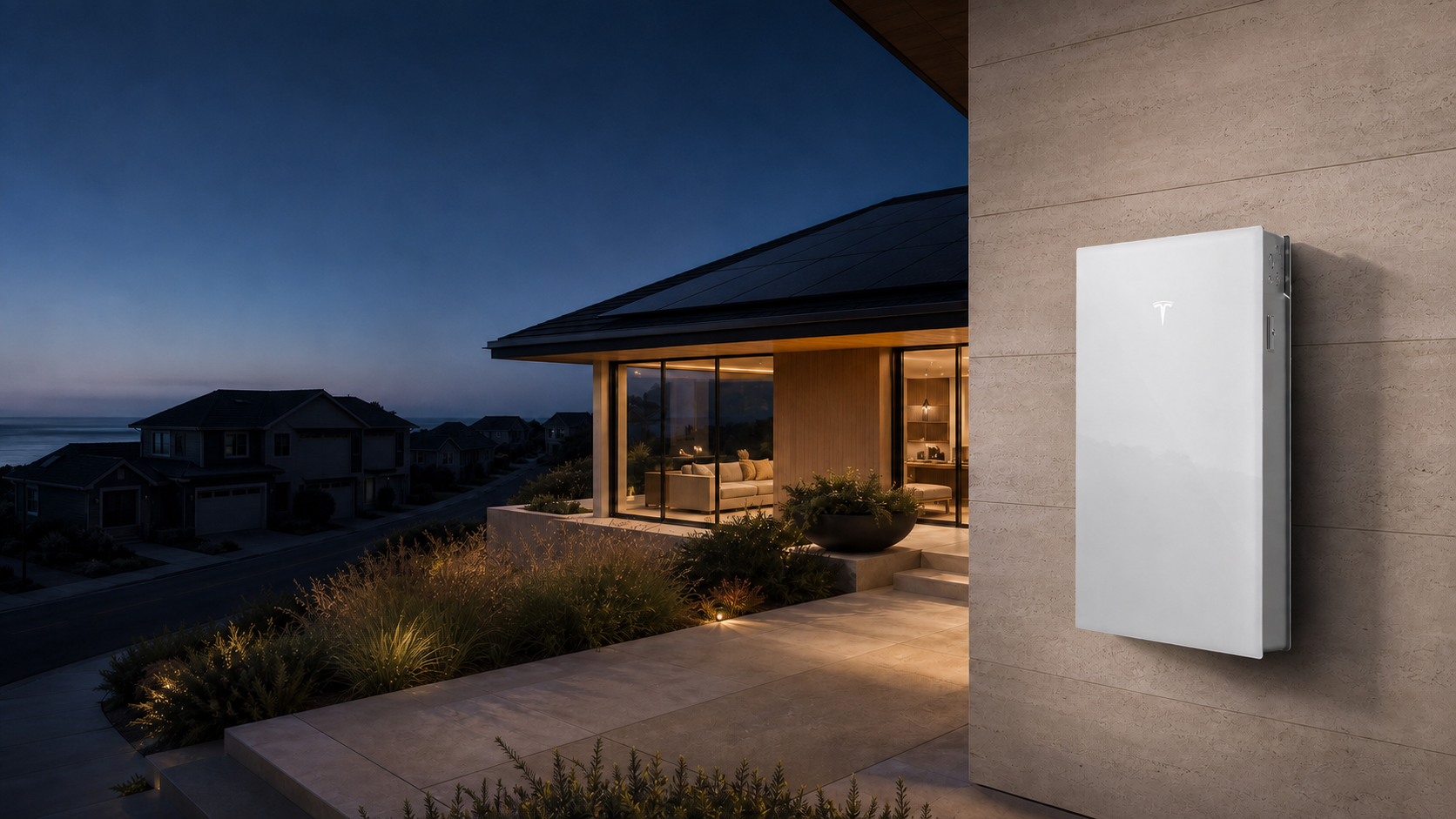
Illustrative concept image; not a documented customer installation or product recommendation.
The war involving Iran is a reminder of how quickly the world can change. Recent Associated Press reporting describes renewed U.S.–Iran hostilities. For California homeowners, that uncertainty makes a practical question feel more urgent: what would keep your household’s essentials running if electricity stopped arriving?
Overseas conflict does not establish that an attack on California’s grid is imminent. But preparing for outages is worthwhile regardless of the cause—severe weather, equipment failure, or a hypothetical foreign or domestic attack that disrupts electricity service. A home battery can add a useful layer of resilience when the equipment remains operational and is configured for backup.
Which essential loads should your battery support?
Keeping lights on, a refrigerator running, and phones charged can help a family navigate an outage. For someone relying on electrically powered medical equipment, access to reliable backup power can be lifesaving.
That requires a specific plan. Confirm device compatibility, backed-up circuits, transfer behavior, and expected runtime with the equipment manufacturer, installer, and care team. The FDA’s emergency guidance advises checking whether medical devices can operate from batteries or generators. A home battery must not replace an emergency or evacuation plan; seek emergency assistance immediately if life-sustaining equipment loses safe power.
Can solar recharge a battery during an outage?
A battery stores a finite amount of energy. Pairing it with solar can let daylight generation replenish that supply during an outage, provided the system supports operation while safely disconnected from the grid. This can extend useful backup time and reduce dependence on a single initial charge.
It is a renewable source, not a constant one: panels do not generate at night, and clouds, smoke, damage, and household demand affect performance. Size the system around essential loads and a realistic reserve. For a numerical example, see how battery capacity and household demand affect runtime. PG&E’s battery guidance explains the relationship between capacity, operating settings, and outage duration.
How can SGIP help pay for home battery backup?
California’s Self-Generation Incentive Program, or SGIP, offers incentives for qualifying storage projects. Its Residential Solar and Storage Equity budget also supports paired solar and batteries at eligible low-income homes. Assistance can meaningfully reduce project costs, subject to eligibility, program requirements, and available funding. Confirm the current budget status with the relevant program administrator.
Where does a solar-plus-battery PPA fit?
At West Coast Alternatives, we see a well-structured solar-plus-battery power purchase agreement as especially appealing for households that want to preserve cash. Where a provider offers a qualifying zero-upfront-payment PPA, homeowners can access solar and included battery equipment without paying the purchase price at installation.
The provider owns the solar system, and you pay for its generated electricity under contract. Confirm that battery installation, required electrical work, maintenance, and replacement coverage are included. Review the rate, escalator, term, and home-sale provisions using the CPUC’s consumer guide. Our California solar PPA guide explains how those contract choices work.
SGIP is an incentive; a PPA is a payment and ownership arrangement. Neither is automatically the better deal. Compare actual offers, total payments, and any remaining utility charges. No upfront payment does not mean free electricity or guaranteed savings.
Uncertainty is a reason to plan thoughtfully. Explore a backup plan for your home with West Coast Alternatives, starting with your essential needs, available support, and a clear understanding of the costs.