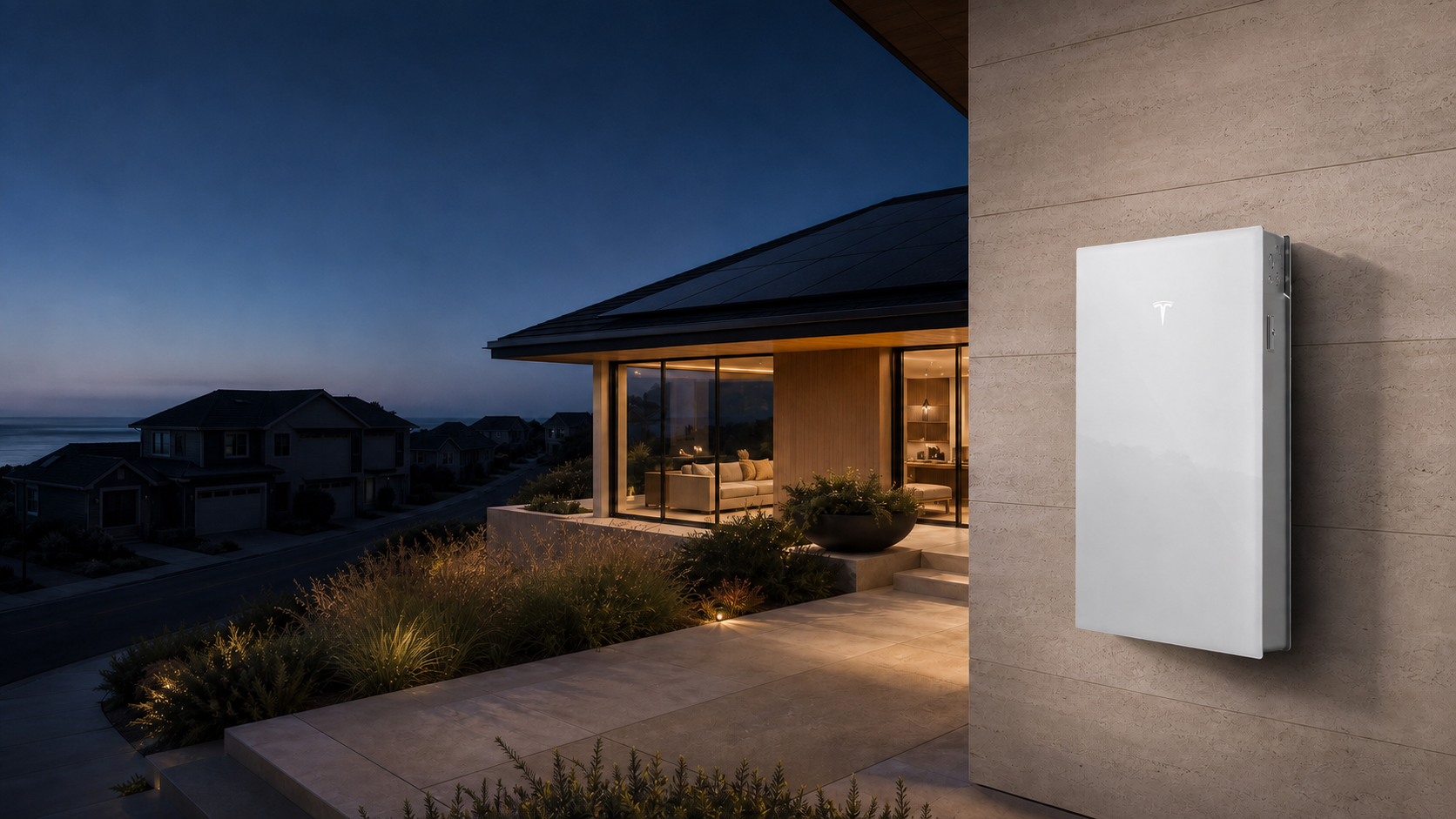
Illustrative concept image; equipment shown is not a product recommendation or a documented customer installation.
Picture a California evening: dinner is underway, the sun is slipping behind the roofline, and the house is still drawing on energy collected earlier that day. For homeowners exploring solar, that possibility gives battery storage an immediate, practical appeal. Sunshine becomes something you can save for a more useful moment.
Pairing solar with a battery also opens a bigger conversation about how to pay for the equipment. A solar power purchase agreement, or PPA, offers one route to using a rooftop system without buying the panels yourself. Together, the right agreement and a thoughtfully designed battery system can offer a compelling way to bring cleaner energy, everyday flexibility, and outage preparation closer to home.
How does a solar PPA work in California?
Under a solar PPA, a provider owns the solar system and you agree to buy the electricity it generates at a contractual price per kilowatt-hour. That differs from a loan, which finances a system you own, or a lease, which charges for using the equipment. A PPA can reduce the need for an upfront equipment purchase, but the electricity is not free.
The details matter: your starting rate, any annual price escalator, contract length, maintenance responsibilities, and home-sale or end-of-term options belong in the comparison. Battery ownership, charges, and service terms also need to be clear in the actual offer. The California Public Utilities Commission’s Solar Consumer Protection Guide explains the main financing choices and the questions to ask before signing.
What does a battery add to a solar PPA?
Solar production and household routines do not always line up. Your roof might have a productive afternoon while everyone is away, then the kitchen and living room become busy as daylight fades. Storage helps bridge that gap by holding some generated energy for later use. The U.S. Department of Energy’s homeowner guide describes this ability to use solar energy when it is needed, including after sunset.
Imagine using part of that afternoon’s production for your evening lights and dishwasher. The appeal is easy to understand: more of your household’s solar generation can serve your household’s schedule. The actual amount depends on the system and your habits, but the idea makes solar feel less tied to the clock.
It is also a useful way to think about the project before looking at equipment. Which hours matter most to you? What does a normal weekday look like? Starting with daily life makes the conversation more concrete than starting with a panel count.
How do California utility tariffs affect a PPA?
For new qualifying solar customers at PG&E, Southern California Edison, and San Diego Gas & Electric, the Net Billing Tariff—marketed as the Solar Billing Plan—makes the timing of electricity use especially relevant. Electricity used directly at home can offset grid purchases, while exported energy receives compensation that is usually below the retail electricity rate. Some export periods are more valuable than others. The CPUC’s net metering and net billing overview explains these differences and why batteries can complement solar.
That creates an opportunity to store daytime production and reduce purchases during more expensive hours. It does not guarantee savings: the applicable utility tariff, export credits, household usage, PPA payments, and battery costs all affect the result. Existing solar customers and customers of other utilities may face different rules.
For local rate, runtime, and payment examples, see our SDG&E battery backup guide.
Ask for a comparison using your actual electricity history, with the solar and battery payments included alongside the remaining utility bill. A clear proposal should make its assumptions visible, including future utility rates. You should be able to understand why the expected outcome fits your home.
Does a solar PPA include outage backup?
For many households, the most meaningful benefit is keeping selected essentials available during an outage. A battery system designed and enabled for backup can disconnect safely from the grid and supply the circuits it supports. Solar panels alone should not be assumed to provide outage power.
Start by naming what matters: perhaps the refrigerator, a few lights, and outlets for charging devices. Then ask the installer which circuits are covered and what can run simultaneously. Battery energy capacity, power output, available charge, household demand, and solar recharging conditions all shape backup duration. Whole-home coverage is a design choice, not an automatic feature.
There is also a daily operating decision. Using more stored energy for evening consumption can leave less reserved for a surprise outage; keeping a larger backup reserve changes that balance. PG&E’s residential battery guidance explains operating modes, backed-up circuits, and the factors that affect runtime.
Our home outage preparedness guide explains how to prioritize essential loads and plan for medical-device needs.
The goal is a specific, understandable backup plan. Knowing what your system is prepared to support can make the prospect of an outage feel less uncertain.
A promising part of California’s energy future
The exciting innovation is the combination: generation, storage, and controls working together around when energy is available and when people need it. At home, that can mean a more useful solar system. Across California, storage has a wider role in making renewable generation available beyond the hours when it is produced.
The California Energy Commission’s Energy Storage System Survey tracks residential, commercial, and utility-scale batteries. It describes storage as a tool for improving grid flexibility and reliability while supporting renewable energy. A household battery is one piece of that larger transition, with its contribution depending on how it operates.
For homeowners, the promise is refreshingly tangible. You can connect a broad clean-energy ambition with ordinary priorities: a comfortable evening, a better understanding of electricity costs, and a plan for essential power. That is an appealing direction for home energy to move.
What should you compare before signing?
Bring a recent year of bills and a short list of priorities to the conversation. Compare the proposed PPA with purchase and loan options. Ask what happens if you sell, who handles repairs, and what choices remain when the agreement ends. Request a written battery and backup scope alongside the financial proposal.
Ready to explore the possibilities? Start your homeowner journey with West Coast Alternatives, or email Jordan@westcoastalternatives.com. A useful first conversation starts with your home, your utility, and what you want your energy system to do for you.